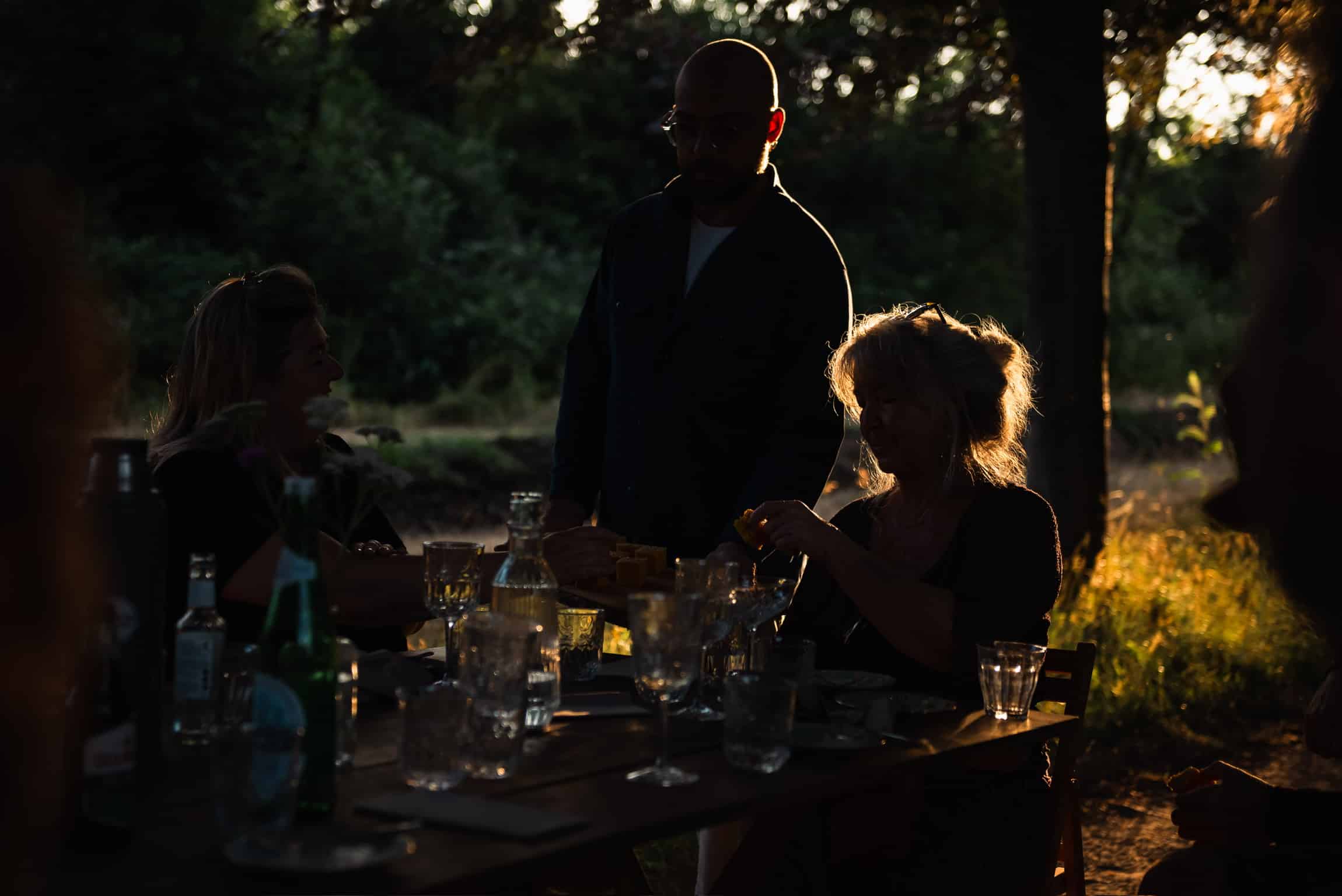
The cauliflower you know, and the farmer you don’t see
Imagine you buy a cauliflower. Organic, from the market. You know it’s better, you just don’t know exactly why. Leendert, our chef, does know. It’s in the soil. In the choices the farmer makes. In what isn’t sprayed and therefore can actually grow.
That insight is at the heart of everything we do in the kitchen at Yūgen Forest. Biodiversity on your plate doesn’t start with a different dish. It starts with the question: where does this come from?
This autumn, we are participating in the Biodiversity on your Plate Challenge by Dutch Cuisine. Not because we have to meet a requirement, but because it names what has been our way of working for years.
What biodiversity on your plate really means
When people think of biodiversity, most think of rare animals or endangered ecosystems. True, but it starts earlier. It starts in the field. With a farmer’s choice to work with or without chemicals. With the insects that live or don’t live in that soil. With the water that stays clean or doesn’t.
Leendert puts it this way: it’s not about choosing a different vegetable. It’s about where the vegetables you already eat come from. That one shift, from conventional to organic, from far away to close by, makes all the difference.
That isn’t a grand gesture. It’s a small, repeatable choice. Exactly the kind of choice that, together, changes a system.
That insight isn’t new. Naturalis Biodiversity Center, together with Dutch Cuisine, developed factsheets that show per product group which choices actually have an impact on soil, insects, and the landscape. We are exploring how to make these factsheets visible at our winter dinner, so guests can see what they are eating and why it matters.
From Zeewolde to our kitchen
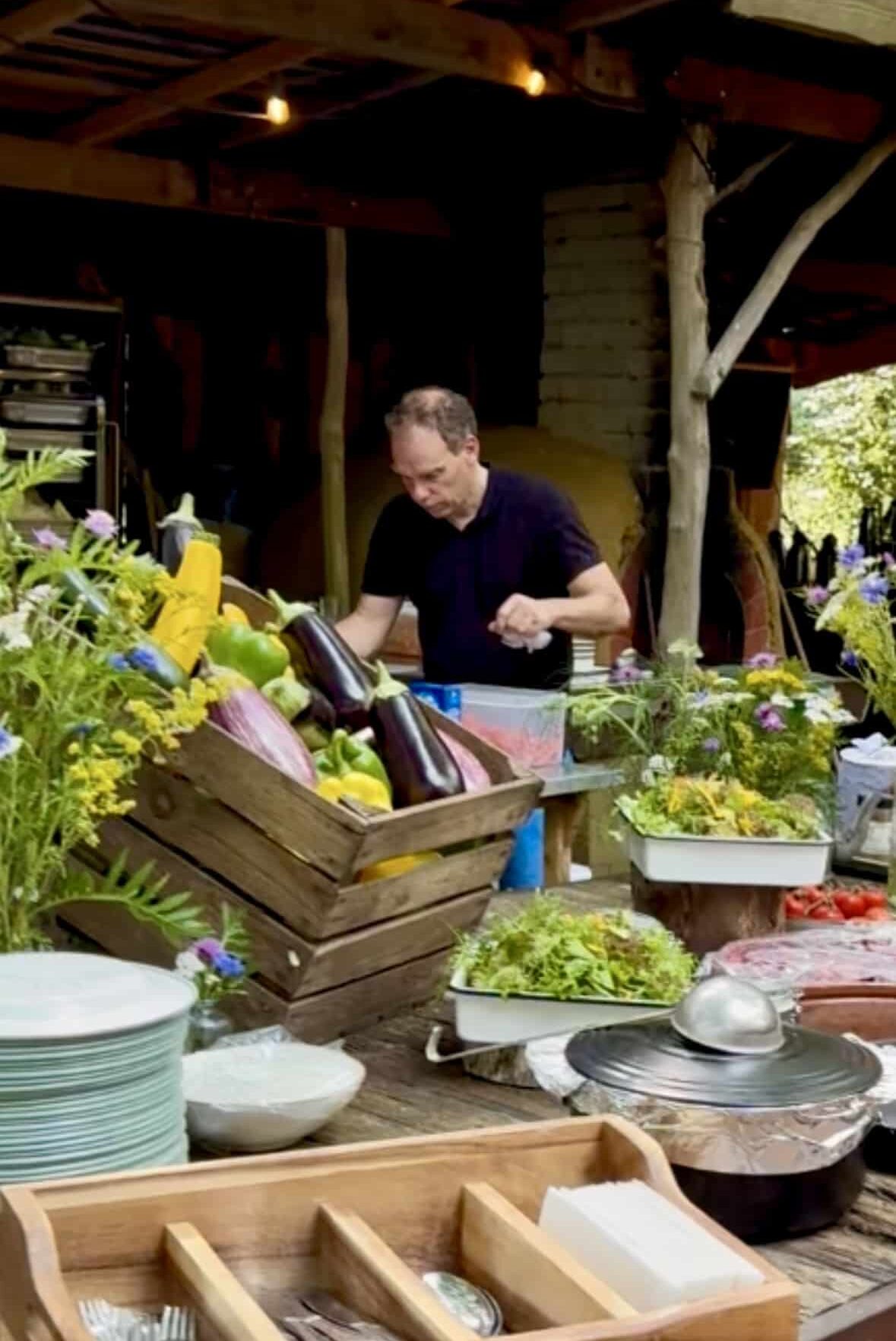
One of our regular suppliers is Rogier Scherpbier from Zonnespelt, an organic flour and grain producer from Zeewolde. Rogier started his business because a link was missing in the chain. Not based on a business plan, but out of conviction. He now supplies producers, consumers, and other buyers within the organic network.
Leendert calls him an example of how it can work: a small entrepreneur who builds something from a missing link that slowly gains a larger impact. Both materially and immaterially. His flour is in our bread. His grains are in our dishes. But his story is also in how we source and who we work with.
That is what biodiversity-friendly entrepreneurship means in practice: not a quality mark on the wall, but a choice with every order.
What grows on our land
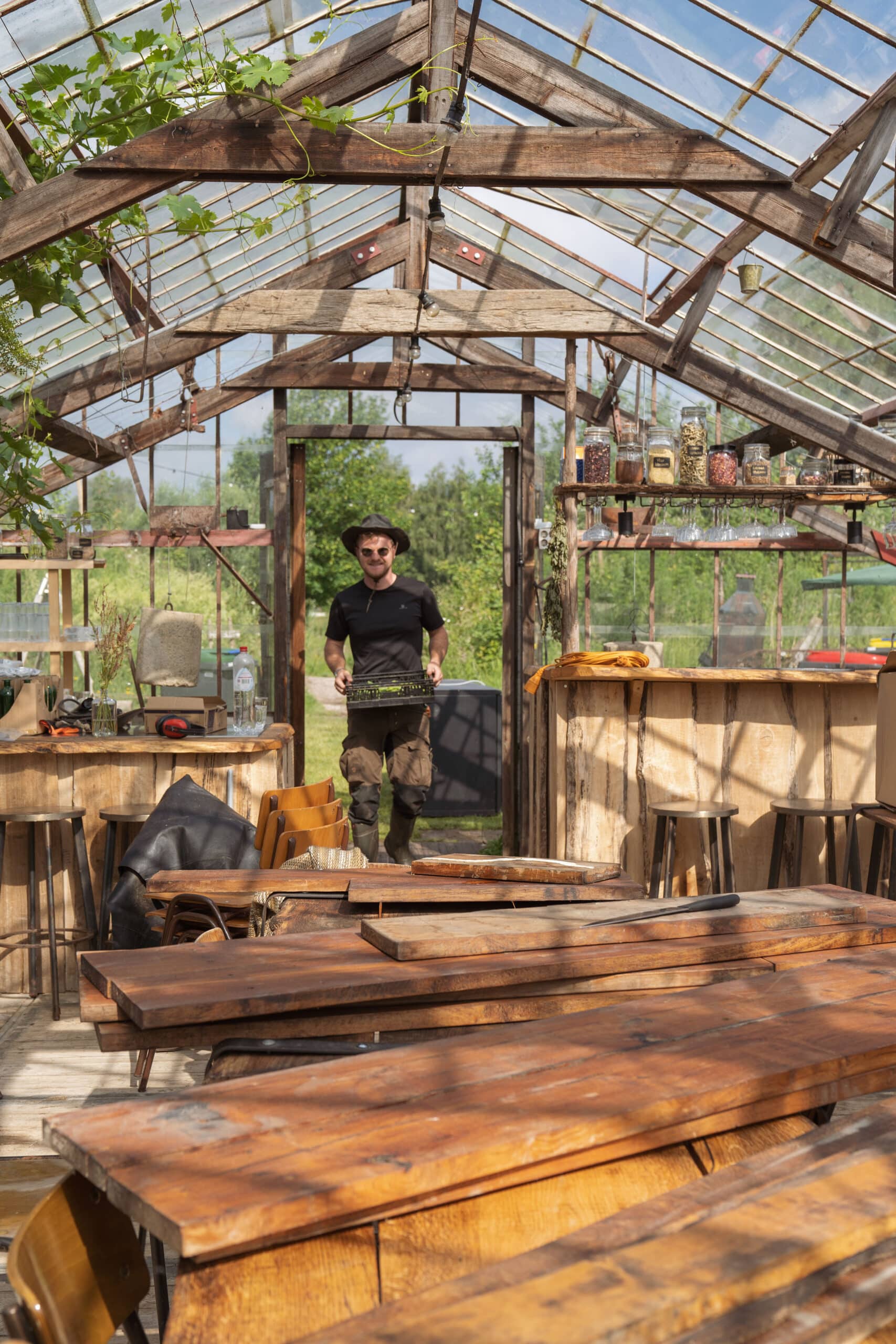
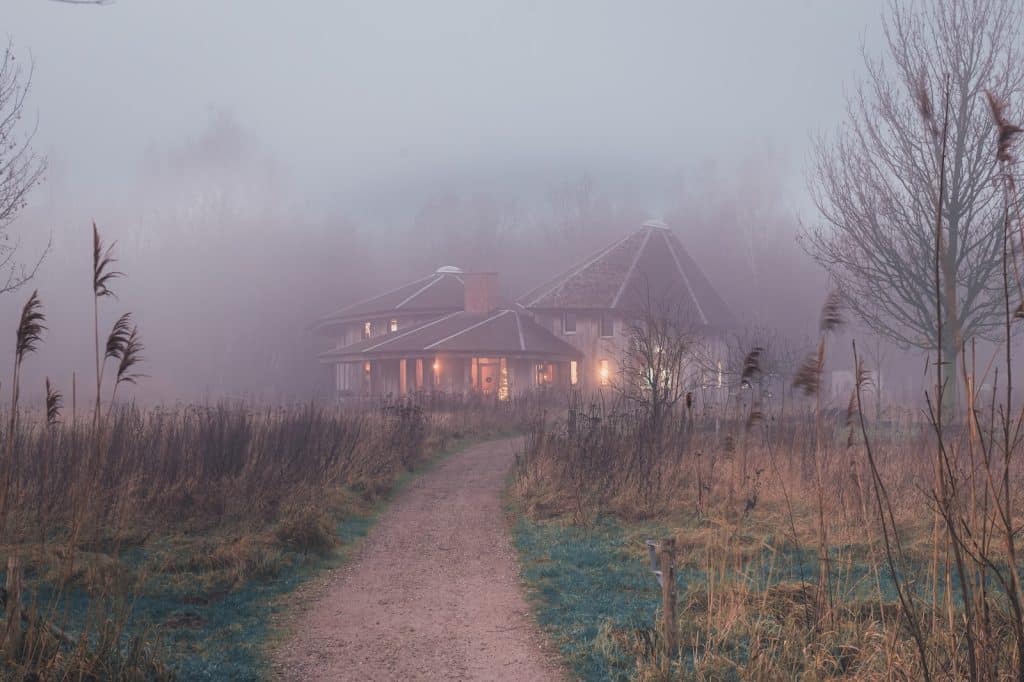
Yūgen Forest is located in a 52-hectare regenerative nature reserve in Dronten, Flevoland. On this site, we have been working on our own market garden for years: strip cropping, two food forests, an orchard, a herb garden. Not as a showpiece, but as a working practice.
One of those food forests was designed by Wouter van Eck and Malika Cieremans, pioneers in analog forestry. The second is syntropic, started in 2025. Both are in development, as ecosystems are.
Chefs like Emile van der Staak, who sources his entire menu from a food forest, show that this is not an exotic experiment but a viable practice. Our own forests contribute to that on our scale.
What grows here comes to the table. Not always, not everything, but structurally. The herb garden is on every plate. The seasonal vegetables help determine what Leendert cooks. That is what biodiversity on your plate looks like for us in concrete terms.
Also in the glass: where organic is the norm
Something people often don’t know: in the hospitality industry, organic is more often in the glass than on the plate. At Yūgen, we see that reflected. Our herbal tea comes entirely from our own land, from the mix the herb garden provides that season. The bar makes seasonal cocktails based on our own garden: shrubs from berries and fruit, kombucha with herbs, water kefir with sage and ginger. The homemade sodas and sparkling water also get their flavor from what grows here.
In addition to what we harvest ourselves, we source from suppliers who follow the same line. Our house wines come from Neleman, certified organic. We serve coffee from Moto, a Dutch roastery that only roasts certified organic coffee.
Not every bottle on the menu is organic, and that honesty is part of it. But at its core, organic is the norm for us, not the exception. Here too, Leendert’s principle applies: it’s not about what you order, but about which farmer or roastery is actually behind that glass.
The challenge as confirmation
The Biodiversity on your Plate Challenge by Dutch Cuisine runs from September to October 2026. Participants are judged on how many biodiversity-friendly dishes they have on the menu, how they communicate with guests about food and nature, and which local organic producers they use.
We are participating because the program names exactly what we are already doing. Not as an achievement, but as a direction. Biodiversity and nature restoration are woven into the mission of Yūgen Forest. This challenge makes that visible to a larger audience.
Leendert says it concisely: a chef with a mission is great, but the framework within which you work determines what you can do with that mission. At Yūgen, we have consciously set those frameworks so that the mission has room to breathe.
On September 21, we will join the program’s joint knowledge session at Boerderij Landzicht in Strijen. Sharing and gathering knowledge, in conversation with other chefs and producers who work from the same conviction. More often comes from these kinds of meetings than from a paper protocol.
This autumn: our winter dinner
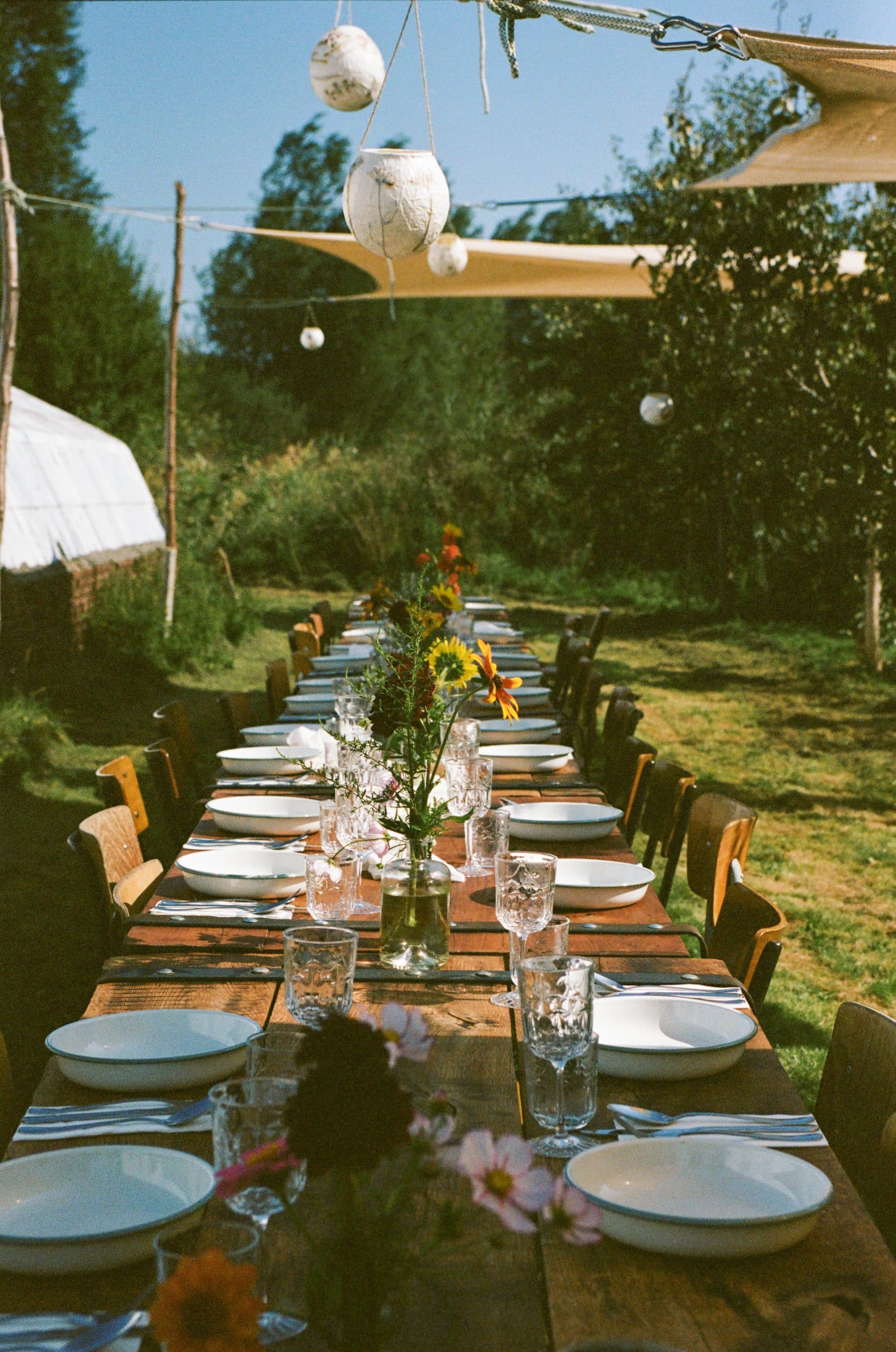
In line with our participation in the challenge, we are launching our own winter dinner concept this autumn. A dinner where food, nature, and wonder come together. Composed of biodiversity-friendly ingredients, cooked by Leendert, in the heart of our nature reserve.
We will share more about this soon. Want to be the first to hear when the dates are announced? Sign up for our newsletter.
Biodiversity on your plate: an invitation
Biodiversity is not an abstract concept. It starts with the cauliflower you buy. With the farmer you choose. With the dinner you attend. Small choices, repeatable, meaningful together.
At Yūgen Forest, we try to make those choices in a way that the land restores itself. That the kitchen reflects that. And that an evening at the table is more than just a meal.
Want to know more about what we do? Check out our page about the market garden, or follow us for the announcement of the winter dinner.